

The Bootstrap Town
How a diverse Minneapolis suburb became a target for federal raids.

The Shadow Log: A Side Investigation
Executive Summary
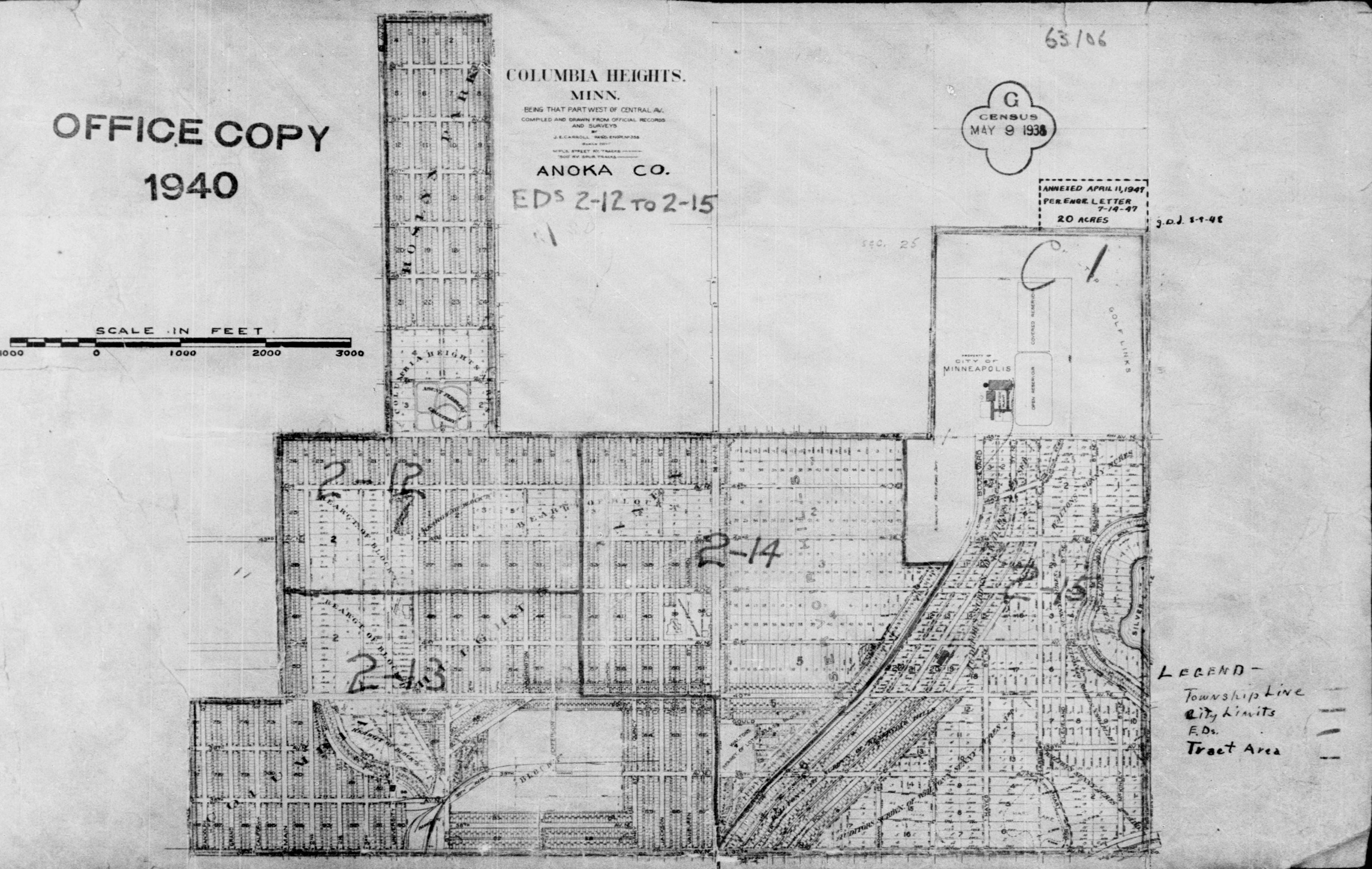
Columbia Heights is a 3.52-square-mile first-ring suburb just north of Minneapolis. Founded in 1898 by 100 citizens with 20 houses, it calls itself a bootstrap town. In 2000, the city was 87 percent White. By 2023, it had a diversity score of 98 out of 100, one of the most rapid demographic transformations of any suburb in the Twin Cities metro. When Operation Metro Surge arrived in December 2025, this small community absorbed a federal enforcement footprint that included seven detained students, at least 23 detained parents from a single elementary school, at least 27 detained family members from another, Immigration and Customs Enforcement (ICE) vehicles circling school buildings at dawn, racially motivated bomb threats, and the internationally covered detention of a five-year-old from his own driveway. As of February 9, 2026, the federal government is fast-tracking the deportation of that five-year-old and his father, with a hearing scheduled for February 13 that could result in their removal from the country by the end of the week. This investigation examines what the enforcement pattern in Columbia Heights reveals about the relationship between demographic transformation and federal targeting.
I. The Bootstrap Town
On March 14, 1898, a patch of farmland north of Minneapolis separated from Fridley Township and became its own municipality. It had 1,696 acres, 100 citizens, and 20 houses. Six years earlier, a naming contest had drawn 2,281 entries. A woman named Olive Louise Thornbergh won $150 in gold for her submission: Columbia Heights.
The city built itself from almost nothing. Working-class families, many of them Polish-American, settled along Central Avenue and raised children who attended Columbia Heights High School and then went to work. A Polish flag still hangs on the Central Avenue border sign. In 1991, the city formalized its roots by establishing a sister-city relationship with Łomianki, Poland.
The oldest structure in the city predates the city itself. John Sullivan, born in 1819 in County Cork, Ireland, and his wife Margaret Grainy, born in 1826 in nearby Kiskeam, emigrated through Liverpool and eventually homesteaded in what would become Columbia Heights. The farmhouse they built around 1863 still stands at 5037 Madison Street, surrounded now by modest ranch homes on a city block that was once open acreage. Sullivan Lake bears the family name. When John Sullivan died in 1887, his estate was valued at $101,809, roughly $2.4 million today. He divided the land among his children, giving 80 acres to each son and 40 to each daughter. An Irish immigrant family’s bootstrap success became the literal ground on which the city was built.
The Heights Theater opened in 1926, built by Arthur Gluek of the Gluek Brewery family as a Prohibition-era real estate venture. It survived three fires, one bombing, and a 1949 tornado. In 1931, a seven-year-old boy named Earl Bakken sat in one of its seats and watched Frankenstein. The image of electricity bringing a body to life stayed with him. Bakken graduated from Columbia Heights High School in 1941 and went on to co-found Medtronic and invent the first wearable battery-powered pacemaker. He later said it all started in that theater.
Private First Class James D. LaBelle, Columbia Heights High School Class of 1943, received the Medal of Honor posthumously for his actions on Iwo Jima. He was nineteen. Pat Proft, born in Columbia Heights in 1947, wrote Police Academy, The Naked Gun, and Hot Shots. Abraham Lincoln’s funeral train car was stored in Columbia Heights for years before being destroyed by fire on March 18, 1911.
This is a real place. It earned its history one family, one house, one generation at a time. Irene Parsons titled her 1986 social history of the city, Columbia Heights: Bootstrap Town. The name fit. For most of the twentieth century, bootstrapping in Columbia Heights looked like the American story it was supposed to be: immigrant families building stability in a small city that took care of its own.
Then the demographics changed. And then the federal government arrived.
II. The Transformation
In the 2000 census, Columbia Heights was 87.4 percent White, 3.6 percent Black, 3.5 percent Asian, and 3.2 percent Hispanic. Population: 18,520. It was, statistically, almost homogeneous.
By 2010, the White population had dropped to 69.7 percent. The Black population had nearly quadrupled to 13.5 percent. The Hispanic population had more than tripled to 11.9 percent. The Asian population held steady at 4.8 percent. Population: 19,496. The transformation was underway, driven not by policy but by the same forces that have always reshaped first-ring suburbs: affordable housing, proximity to a major city, and the migration patterns of new Americans looking for a foothold.
By 2023, the American Community Survey estimated Columbia Heights at 53.4 percent White, 24.9 percent Black, 13.3 percent Hispanic or Latino, and 4.8 percent Asian, with just 51.5 percent identifying as non-Hispanic White. The foreign-born population had reached 20.7 percent, well above the national average of 13.8 percent. BestNeighborhood.org assigned the city a diversity score of 98 out of 100. In 23 years, Columbia Heights had gone from a city where nearly nine out of ten residents were White to one of the most ethnically diverse communities in Minnesota.
The institutions adapted. In 2023, the city established a second sister-city relationship, this time with Galdogob, Somalia, reflecting the growth of the Somali-American community. The school district added English Learner teachers as enrollment climbed. The district’s own Language Instruction Educational Program plan documents the acceleration: English Learners comprised 36.8 percent of students in 2022-2023, 41.7 percent in 2023-2024, and 48.3 percent in 2024-2025, with students speaking 37 documented home languages across a district of roughly 3,500. At Valley View Elementary, about 60 percent of students were Hispanic or Latino, and roughly three-quarters qualified for free or reduced-price lunch, according to state data.
In December 2024, CBS Minnesota profiled the school. Principal Jason Kuhlman stood in Valley View’s hallways and said, “I think our influx of newcomers is a gift, I really do. They are achieving equal to what our native speakers are, and that’s a testament to all of our teachers in Heights.” The school had just received a $600,000 grant. English Learner graduation rates across the district stood at 83 percent.
In 2016, the National Civic League awarded Columbia Heights the All-America City Award for civic engagement. The League specifically cited the police department’s community policing model as a reason. The Columbia Heights Police Department (CHPD) had required all officers to complete at least ten hours of training in community-oriented programming, including classes on working with children and across cultures. Officers volunteered as Big Brothers. They created a Cops-N-Kids program with weekly open gyms for after-school recreation. They built a Teen Police Academy. They read to younger children as part of an anti-bullying campaign. They went door-to-door in the Circle Terrace neighborhood, a low-income area where 60 percent of residents received government assistance, and asked Somali immigrant families what they wanted for their community. The answer became the City of Peace Neighborhood Center, which opened at 1311 Circle Terrace Boulevard in 2018. Teen arrests fell by more than half between 2007 and 2014, from an average of 247 per year to 106. Seven straight years of crime reduction followed.
This was not a community that ignored its challenges. This was a community that built specific, documented, measurable infrastructure to meet them.
The demographic transformation was not smooth or effortless. But the institutional markers tell a consistent story: a community that absorbed rapid change and built infrastructure to support it. Sister cities on two continents. A school district investing in newcomers. A city government led by Mayor Amada Marquez Simula. A police department that had won national recognition for integrating community policing with demographic change. A council member named Rachel James, who had grown up on a dairy farm in rural Minnesota, earned a master’s degree in community ministry and moved to Columbia Heights in 2010 because she saw a place that combined small-town connection with urban diversity.
Then, on December 1, 2025, the Department of Homeland Security launched Operation Metro Surge.
III. The Occupation
The first Columbia Heights student was taken on January 6, 2026.
It was a Tuesday. A fourth-grader named Elizabeth Zuna Caisaguano and her mother, Rosa, were driving to the school bus stop at 6:10 a.m. when federal agents’ vehicles surrounded their car. Elizabeth, 10, called her father, Luis, at his construction job. She told him ICE agents were going to bring her to school.
At Highland Elementary, school social worker Tracy Xiong began to wait. “Several staff members, including myself, waited outside the school building for a vehicle to approach and drop her off,” Xiong later told reporters at the state capitol. “No one ever came.”
Luis Zuna rushed to Highland. He, Xiong, and the school staff waited for hours. By that afternoon, they learned that Elizabeth and her mother were already in Texas, having been flown to the South Texas Family Residential Center in Dilley. The fourth-grader who had attended Highland since kindergarten, who loved volleyball, who dreamed of becoming a doctor, who came off the school bus every morning giggling with a friend, was 1,200 miles from home.
“In my profession, I have seen many people break down in grief,” Xiong said, “but that image of Elizabeth’s father will stay with me forever. I watched him sit in his car, bury his head in his hands, and cry uncontrollably.”
“That image of Elizabeth’s father will stay with me forever. I watched him sit in his car, bury his head in his hands, and cry uncontrollably.” — Tracy Xiong, Highland Elementary school social worker
Elizabeth’s friend noticed something was wrong that morning. As Highland’s principal secretary, Carolina Gutierrez, later told Sahan Journal: “She knew something was wrong because she saw Dad inside the school.” Two ten-year-old girls who had been giggling together at the bus stop every morning. One of them was gone.
On the plane to Texas, Elizabeth believed she was being sent back to Ecuador. She told her father later that she thought “her dream was over.”
The school district did not know it at the time, but Elizabeth was the first of seven.
On January 20, at least three more Columbia Heights students were taken.
That morning, a 17-year-old Columbia Heights High School student was stopped on his way to school and removed from his car by armed, masked agents. No parents were present. He was sent to Texas. He has since been released and declined to speak publicly about his case.
That afternoon, five-year-old Liam Conejo Ramos and his father, Adrian Conejo Arias, arrived home from Valley View Elementary preschool. ICE agents were waiting in the driveway. Superintendent Zena Stenvik described what happened next at a press conference the following day, held in the classroom of Liam’s teacher, Ella Sullivan: “The agent took the child out of the still-running car, led him to the door, and directed him to knock on the door, asking to be let in, in order to see if anyone else was home, essentially using a five-year-old as bait.”
Another adult in the home begged agents to let him care for Liam. He was refused.
Liam’s middle-school brother returned home twenty minutes later to find his father and little brother gone and his mother terrified.
Sullivan, Liam’s preschool teacher, cried as she spoke to reporters in her own classroom. “He’s a bright young student, and he’s so kind and loving,” she said. “His classmates miss him. All I want is for him to be safe and back here.”
The surname is a coincidence. Ella Sullivan is not related to the Irish immigrant family whose farmhouse still stands six blocks from the school where she teaches. But in a city that was literally built on Sullivan land, a teacher named Sullivan, weeping for a detained Ecuadorian child, carries the weight of 163 years.
On the same day, a second 17-year-old, a female student, was detained along with her mother after ICE agents pushed their way into their apartment. She is believed to still be at Dilley.
Liam’s family had an active asylum case. No deportation order. Immigration lawyer Marc Prokosch said they had “done every single thing the right way. Every step of their immigration process has been doing what they’ve been asked to do. This is just cruelty.”
The Department of Homeland Security told a different story. Spokesperson Tricia McLaughlin said ICE “did NOT target a child,” that Liam’s father had “fled on foot,” and that the mother had “refused to take him.” The school district’s account, the lawyer’s account, and the DHS account could not all be true. This pattern of competing narratives between local institutions and federal authorities would repeat throughout the crisis, mirroring the information asymmetry documented elsewhere in this series.
The detentions did not stop.
On January 29, the mother of two Valley View Elementary students, a second-grader and a fifth-grader, was detained during a routine immigration check-in appointment. With no one in Minnesota left to care for her children, she called Valley View and asked Principal Jason Kuhlman to bring them to her at the Whipple Federal Building.
Kuhlman walked the boys out of their classrooms and drove them to federal custody.
The eldest boy had been stoic as Kuhlman explained what was happening. When they arrived at the Whipple Building, the boy broke into tears and gripped the school nurse.
The family was flown to Dilley that afternoon. A judge ordered their release the next day, January 30. They returned to Minnesota on February 4. Kuhlman picked them up at the Twin Cities airport and drove them home.
In the back seat, the boys told him something that made his head snap back.
They had seen a classmate in the Dilley cafeteria.
A fifth-grade girl from Valley View had stopped coming to school weeks earlier. Her family’s phone went unanswered. The landlord checked the house and found no one. Her school-issued Chromebook was still there. Staff searched ICE’s online detainee lookup and could not find her. “It’s hard to know if they’ve been abducted or if they’re just in hiding,” Kuhlman told the Washington Post.
The two boys, sitting in the back seat of their principal’s car on the drive home from the airport, had solved the mystery. Their classmate was in a federal detention center in Texas with her mother and stepfather. She had been there for nearly a month. The school district did not know.
“Both our heads snapped back,” Kuhlman said. “I’m like, ‘Well, there we go, we found our missing student.’”
By early February, the district had confirmed seven detained students ranging in age from five to seventeen. Five had been released. Two were believed still in custody. District spokesperson Kristen Stuenkel told CNN there were “other students with whom we have lost contact who might also be in a detention facility.”
But the seven detained children were only the visible tip of the iceberg.
At Valley View Elementary alone, Superintendent Stenvik told MPR News that at least 23 parents had been detained by ICE. Not students. Parents. Twenty-three parents at one school with 570 students. Peg Nelson, a Valley View educator, put the total number of detained family members even higher: at least 27, and rising. “It’s hard to keep track,” she told the Star Tribune, “because we have some family members who are just disappearing.” CNN reported that nearly 30 Valley View students and parents or caregivers had been detained during the sweeps. The school’s entrance, CNN noted, now resembled a food pantry. Kuhlman and his staff delivered food to 140 families a week. About 100 of the school’s 570 students were learning virtually.
About 60 Valley View families were afraid to bring their children to school at all. “NO ICE ACCESS” signs were taped to the school’s front doors. Each morning, Kuhlman took a lap around his block in his truck before the first bell, checking for ICE vehicles. “When we go to dismiss kids, we look up and down the block.”
Across the district, 38 percent of students were absent on a single day. At Valley View, Kuhlman later told NPR, typical daily absences ran 20 to 30 students. After the detentions began, that number spiked to 194. “That was COVID levels of absenteeism,” he said. A quarter of the high school student body shifted to virtual learning. Indoor recess was held when ICE agents were spotted nearby. Community members began standing guard outside schools and at bus stops, part of a loose-knit but increasingly organized network of ICE watchers documented by the Washington Post across Minneapolis. Volunteers patrolled in cars, blew whistles from open windows to warn neighborhoods, and tailed unmarked SUVs until they left. A Minnesota Army National Guard veteran who participated told the Post he saw it as “the most American thing to do: not to be scared of people trying to scare you.” Federal officials said the observers were breaking the law. The observers kept watching. A district employee was stopped by federal agents every single day during their commute.
The agents conducting these operations were, in many cases, newly hired. Government Executive reported in January 2026 that ICE had more than doubled its workforce, from 10,000 to 22,000, in less than a year, sorting through 220,000 applicants and offering $50,000 signing bonuses. To move bodies into the field, DHS shortened training from roughly five months to six to eight weeks. The Federal Law Enforcement Training Center curtailed operations for non-ICE personnel to accommodate the surge. Spanish-language requirements were eliminated and replaced with translation technology. The agents circling Columbia Heights schools at 6 a.m. may have had less than two months of formal preparation for the encounters they were initiating with families, children, and communities they had never seen before.
Teacher Breonna Robinson told CNN she watched her class shrink in real time. “When I log in to take attendance, it shows who is dropping off my roster because they’re going online,” she said. “It’s like 20% of my class that I’m losing.” Her remaining students had questions she was not trained to answer: “What are ICE agents? What’s their job? What isn’t their job? And why don’t my friends feel safe coming to school anymore?”
Peg Nelson, a 33-year veteran teacher at Columbia Heights High School, said: “In the past 33 years, I’ve never experienced any disruption or danger to students like the current ICE occupation of Minnesota.”
Stuenkel put the scale of the presence into words: “ICE is so prevalent in our community and it’s like they’re stalking everybody. You can’t even imagine how bad it is, because it’s such an immigrant community. Over 51% of our students’ home language is Spanish.” Additional families came from East Africa and Asia.
Superintendent Stenvik added, on Bring Me The News: “They know when our school start times are. They know when our school dismissal times are, and they circle during those times.”
This was the same school, the same principal, the same Ecuadorian families that CBS Minnesota had profiled as a success story seven weeks earlier. The $600,000 grant was still there. The English Learner teachers were still there. But the community that had been celebrated for absorbing rapid demographic change was now being occupied by the federal government that change had apparently attracted.
IV. The Community Responds
Columbia Heights did not wait for permission to push back.
The city had, in fact, anticipated trouble. On October 8, 2025, nearly two months before Operation Metro Surge launched, Columbia Heights posted a public statement: the police department “does not enforce federal immigration law” and would not ask residents about their immigration status. The statement directed residents to the National Immigrant Justice Center. It was one of the first such statements issued by any city in the metro.
But the statement could not prevent what came next. Chief Matt Markham would later tell reporters he only knew of ICE actions “as ICE typically does not communicate their activity to us.” The city had a policy. ICE had a plan. The plan did not require the city’s cooperation.
Where the city could act, it did. When residents reported that federal agents were using Keyes Park as a gathering spot, the city closed the parking lot. Mayor Marquez Simula framed the city’s posture to local media: “I think we are helping. We are documenting, witnessing, and observing what’s happening, and that’s helping our community.” It was the language of a municipality that understood its limited authority but refused to be passive.
On January 22, one day after the press conference in Ella Sullivan’s classroom, the city council and Mayor Marquez Simula issued a formal statement: “We have seen the trauma. We have seen the fear in our community’s eyes. We have heard from seniors, students, and families. We have met with business owners, school board members, and neighbors who have experienced these harms firsthand. We have been present. We have listened. And we believe our community.”
The statement reported that residents had described agents who refused to show warrants, ignored due process, and harassed residents and business owners.
Five days later, on January 27, Murzyn Hall filled to capacity.
The building itself matters. Built in 1939 as a Works Progress Administration project, Murzyn Hall has served as Columbia Heights’ community gathering space for 87 years. It hosted dances and civic events throughout World War II, the Korean War, the Vietnam War, and every decade since. On this Monday evening, it hosted a three-hour listening session about federal agents in school parking lots.
Council Member Rachel James spoke from personal experience. “I’ve been traumatized. My children have been traumatized,” she said. “But that’s nothing compared to getting a text from a kid in my church saying ICE is blocking their driveway and that I need to get there fast.”
Then she offered a number that measured the scale from the community’s perspective: “We have been targeted to the point of 100 different ICE agents in a single day.”
The number has not been independently verified. But the council member said it in a public forum, attributed it to what residents had reported, and no one in the room challenged it.
Council Member Connie Buesgens acknowledged the situation had no precedent: “We haven’t been in this situation, and we’re working things out as we go along.” She referenced Chief Markham’s concern that city leaders did not want the Insurrection Act imposed on Columbia Heights. The fact that a suburban police chief and city council were discussing the Insurrection Act as a possibility measured how far outside normal governance the situation had gone. Later, Buesgens told residents: “Be brave. Be bold. And do. Living your lives the way you want to live them is also a form of resistance.”
“Be brave. Be bold. And do. Living your lives the way you want to live them is also a form of resistance.” — Council Member Connie Buesgens
Residents who spoke described a pattern: ICE conducting traffic stops without warrants, entering businesses without identifying themselves, and other actions they said violated constitutional protections. The concerns were not abstract. They were being reported in a WPA-built community hall by people who lived in the 3.52-square-mile area where the enforcement was happening.
Council Member Laurel Deneen: “My heart is racing as I hear everyone’s stories. It is incredibly hard to watch your community be attacked.”
City Manager Aaron Chirpich told the crowd that Columbia Heights was coordinating with roughly 13 other cities on unified messaging and legislative strategy. “We’re looking at hiring a PR consulting firm with attorneys and lobbyists,” he said. Days later, on February 2, a coalition publicly launched under the name Cities for Safe and Stable Communities. Its founding members, per the City of Bloomington’s official announcement:
Bloomington
Brooklyn Center
Brooklyn Park
Columbia Heights
Eden Prairie
Edina
Golden Valley
Hopkins
Maplewood
Minnetonka
Richfield
St. Louis Park
Twelve suburban governments. Less than a week.
Mayor Marquez Simula told KSTP that local businesses were “down about 40 percent” due to the ICE surge. The figure was her characterization, not an independent economic measure, but it aligned with metro-wide patterns that were becoming quantifiable. The Star Tribune reported on February 5 that Minneapolis businesses were losing $10 million to $20 million in weekly sales, with revenue down by more than half since the surge began. The Lake Street corridor alone, home to an estimated 2,000 restaurants, marketplaces, and shops, saw revenue decline by $46 million between December 2025 and January 2026, according to city officials. Erik Hansen, the city’s director of Community Planning and Economic Development, said he could not imagine “one business in Minneapolis that has not had a revenue decline in the last eight weeks.” Immigrant-owned businesses that formed the city’s cultural districts reported revenue losses of 80-100%. “It’s horrifying to think about what this could mean,” Hansen said, “because it is not a singular event. A tornado didn’t just come through Minneapolis, and the day after, when the sun comes back out, we’re assessing the damage. We have a situation where we’ve had a couple of tornadoes, and we don’t know if the tornadoes have stopped.”
On Central Avenue in Columbia Heights, businesses responded in kind. Bar Oscar held a charity night on January 27, donating 50 percent of profits and 100 percent of tips to the Immigration Defense Network. Francis Burger Joint stocked its front counter with whistles for ICE observers, de-escalation materials, and supplies for removing pepper spray. The co-owners said they felt a responsibility to help protect their stretch of Central Avenue. The community’s commercial corridor was doing what its schools were doing: absorbing the impact and improvising a response with whatever was at hand.
School Board Chair Mary Granlund asked people to contact their congressional representatives “to ask for an immediate and peaceful resolution to this occupation.”
That word. Occupation. It appeared again and again, from elected officials, from teachers, from parents. Not protest language. Not activist vocabulary. The clinical term used by a school board chair, a 33-year veteran teacher, and a city council to describe what was happening in a 3.52-square-mile suburb that had won an All-America City Award nine years earlier.
V. Release, and What Came After
On January 31, U.S. District Judge Fred Biery in San Antonio ordered the release of Liam and his father. Attorney General Keith Ellison quoted the ruling at a Capitol press conference: Judge Biery had called Operation Metro Surge “ill-conceived and incompetently implemented.” Ellison noted that such language in a judicial opinion was extraordinary. “That’s about as powerful a language you’re ever going to read in a judicial decision.”
Texas Representative Joaquin Castro personally escorted Liam and his father home. They arrived in Minnesota on Sunday, February 1. Community members gathered outside the family’s house.
Lourdes Sanchez, a cleaning business owner, described the moment to the Associated Press: “We cried so much when we heard that he was coming back. My son is also named Liam, and he is five years old, so it felt personal for us.”
Luis Zuna, Elizabeth’s father, stood in the crowd and held up photographs of his daughter, still detained in Dilley with her mother. He had been waiting a month.
The next morning, Monday, February 2, Columbia Heights Public Schools received bomb threats. Emailed to multiple schools in the early morning hours, the threats forced a district-wide closure. The police chief called them “racially and politically motivated.” Columbia Heights PD, Minneapolis PD, Metro Transit Police, and the Columbia Heights Fire Department searched every campus. No devices were found. Classes resumed on Tuesday.
On Tuesday, February 3, Governor Tim Walz and school officials held a press conference at the state Capitol. Tracy Xiong stood beside the governor and told Elizabeth’s story. Walz sent a letter to DHS Secretary Kristi Noem requesting information on all detained children. “We don’t know how many others are in the same situation that didn’t get a photo that went viral,” he said, referring to the image of Liam in a blue bunny hat, an ICE agent’s hand on his Spider-Man backpack.
That evening, Elizabeth and her mother were released from Dilley. They had been detained for 28 days. Both had been sick. Elizabeth had flu-like symptoms. Her mother had broken out in hives. Neither had been given medicine, despite two confirmed cases of measles at the facility. Texas Representative Joaquin Castro had spent two and a half hours inside Dilley that week and reported that the 1,100 detainees included a two-month-old infant. “They are literally being treated as prisoners,” Castro said in a live-streamed video. “This is a monstrous machine.” A Marshall Project analysis found that ICE had booked at least 3,800 children into detention since Trump took office, with at least 1,000 held longer than 20 days, a court-ordered limit. “Every single day that a kid is in a place like this, they deteriorate,” said Javier Hidalgo, legal director of the Refugee and Immigrant Center for Education and Legal Services.
On February 4, the two Valley View brothers returned to Minnesota. Kuhlman picked them up at the airport. In the back seat, they told him about the missing fifth-grader.
Also on February 4, Border Czar Tom Homan held a press conference in Minneapolis and announced that 700 federal officers would withdraw from Minnesota “effective immediately.” Homan framed it as evidence of “unprecedented cooperation” from county authorities. Roughly 2,000 ICE officers would remain in the state, compared to a typical baseline of about 150. “We are not surrendering the president’s mission of a mass deportation operation,” Homan said. “If you’re in the country illegally, you are not off the table.” He disclosed that 158 people had been arrested in the past month for interfering with federal officers, and warned that a “complete drawdown” was contingent on “the decrease of the violence, the rhetoric, and the attacks against ICE and Border Patrol.” Minneapolis Mayor Jacob Frey responded: “2,000 ICE officers still here is not de-escalation. My message to the White House has been consistent: Operation Metro Surge has been catastrophic for our businesses and residents. It needs to end immediately.”
Less than 24 hours after Homan’s announcement, Minneapolis City Council Member Aisha Chughtai posted that a convoy of federal agents had broken through the glass entryway of a Minneapolis apartment building at 6 a.m. without presenting a warrant. “Less than 24 hours ago, Tom Homan announced the end of large convoys in Minnesota,” she wrote. “Bullshit.”
On February 5, Education Minnesota and the school districts of Duluth and Fridley filed a lawsuit seeking to bar ICE from operating near schools. Columbia Heights teacher Kristin Sinicariello, a high school social studies teacher and girls' soccer coach, told reporters that seven ICE vehicles were spotted in a school parking lot at 6 a.m. on a single Monday. Her soccer team had forfeited a recent game because too many players were afraid to leave home. “ICE operations near schools must end now,” she said. In the adjacent Fridley district, Superintendent Brenda Lewis reported that even after the drawdown announcement, six ICE vehicles appeared at a school parking lot and circled the building.
Stenvik responded to CBS Minnesota: “We haven’t seen any de-escalation yet in our community. Yesterday morning, ICE chose to park in our school parking lot, so no, we’ve not seen any de-escalation at this time.”
Then the federal government escalated in a different direction.
On February 5, the same day Homan announced the officer drawdown, DHS filed a motion seeking to end the Ramos family’s asylum claims and expedite their removal from the country. The five-year-old whose detention had generated international coverage, whose release had been ordered by a federal judge who called the operation “ill-conceived and incompetently implemented,” was now the subject of fast-tracked deportation proceedings. Texas Representative Joaquin Castro called the motion an attempt to “break this boy’s spirit and all of the Americans who are praying for him.” The family’s attorney, Danielle Molliver, described the expedited timeline as “retaliatory.”
At a February 6 hearing, the family was granted a continuance. Their next court date is February 13. Depending on the outcome, Liam and his father could be deported by the end of that week. The school district confirmed the family is currently sequestered. Superintendent Stenvik said the continuance provided “additional time” but also “continued uncertainty for a child and his family.” She added: “As educators, we know uncertainty is difficult for students and deeply disruptive to learning and well-being.”
Deputy Attorney General Todd Blanche had separately said on ABC News that the administration intended to appeal Judge Biery’s original release order. “We very strongly believe that they should be held.” As of February 9, 2026, no notice of appeal has been independently confirmed on the court docket, but the expedited deportation motion has rendered the appeal question secondary. The government is no longer trying to return Liam to detention. It is trying to put him on a plane.
The government is no longer trying to put Liam back in detention. It is trying to put him on a plane.
VI. The Question the Data Asks
Columbia Heights’ diversity score is 98 out of 100. Its foreign-born population is 20.7 percent, half again the national average. More than half its students speak Spanish at home. Additional families come from East Africa and Asia.
Operation Metro Surge was publicly justified by the Feeding Our Future fraud investigation, centered in the Somali-American community. On February 4, DHS announced that the operation had resulted in more than 4,000 arrests statewide, with Assistant Secretary McLaughlin citing convictions for domestic assault, sexual conduct with a minor, drug trafficking, and DWI among those detained. The agency framed this as evidence that the surge was targeting public safety threats. But McLaughlin, when pressed by NBC News, did not provide a breakdown of how many of those 4,000 actually had criminal charges. The DHS press releases that named individual arrestees included convictions for offenses as minor as trespassing and disorderly conduct alongside the serious crimes headlined in the announcements. The gap between the rhetoric and the specifics was structural.
At the same press conference where Homan cited the 4,000 arrests, he also disclosed that 158 people had been arrested for interfering with federal officers. The number was presented as evidence of lawlessness. It also provided evidence that the community’s response to the operation had been significant enough to warrant its own enforcement category.
None of the Columbia Heights student detentions appear connected to fraud investigations or criminal records. The families that have been identified are Ecuadorian asylum seekers, people who came to the United States legally and were following the process they had been told to follow. Judge Biery, in ordering the release of both Liam and Elizabeth, found no legitimate public safety purpose for their detention. The federal government’s own numbers, presented as vindication, raise a structural question: if the operation was producing 4,000 arrests of individuals with criminal histories, why were agents circling elementary schools at 6 a.m. to detain families with active asylum cases and no criminal records?
At Valley View Elementary, the numbers tell the story:
Student body: about 60 percent Latino, roughly 15 percent Black, about 13 percent White
Free or reduced-price lunch eligibility: approximately three-quarters
Students detained by ICE: three
Parents detained by ICE: at least 23
Total family members detained: at least 27
Families receiving food deliveries from school staff: 140 per week
In a district of roughly 3,500 students, seven were physically taken into federal custody. That is roughly one in 500. Scale the 23 detained parents from Valley View across the district, and the disruption reaches into hundreds of households.
The question is not whether Operation Metro Surge affected Columbia Heights. The question is why this particular community absorbed this particular intensity of enforcement. The detained families had active asylum cases. The school district had been celebrated nationally for integrating newcomers. The city had a functioning multicultural infrastructure and elected leadership that reflected its changed demographics. The police department had won a national award specifically for community policing that integrated immigrant populations. And the agents conducting enforcement operations in this community were, in many cases, products of a training pipeline that had been compressed from five months to six weeks and stripped of its Spanish-language curriculum.
The federal government’s response to losing in court was not to reconsider the operation. It was to accelerate deportation proceedings against a five-year-old.
What Columbia Heights had that it did not have 25 years ago was a population that looked like a target.
The demographic data provides the circumstantial frame. The enforcement pattern provides the evidence. The absence of any connection to the fraud investigations that justified Metro Surge provides the negative space. This is not about one child, one family, or one school. It is about whether a community’s transformation from homogeneity to diversity made it a target.
The data asks the question. The answer lies with the institutions that sent, a council member described, 100 agents in a single day to a city of 22,000 people.
VII. What Bootstrap Means Now
In December 2024, Jason Kuhlman stood in the hallways of Valley View Elementary and told CBS Minnesota that his school’s influx of newcomers was a gift. Seven weeks later, he was driving detained children to federal custody at a mother’s request. A week after that, he was picking up released children at the airport. Every morning, he patrols the perimeter of his school in his truck before the first bell rings.
The bootstrapping did not stop when the demographics changed.
The Tibetan community bootstrapped a reincarnated lama. Jalue Dorje, born in Columbia Heights in 2006 to Tibetan immigrant parents who worked as janitors, was recognized at four months old as the eighth incarnation of a Buddhist lineage dating to 1655. The Dalai Lama confirmed the recognition. Jalue grew up attending Highland Elementary and Columbia Heights High School, playing football, collecting Pokémon cards, and listening to Drake. He graduated from Columbia Heights High School in 2025 and departed for a monastery in northern India. A working-class suburb produced one of the few American-born reincarnated lamas in history.
The schools bootstrapped AP programs and college pathways. The city bootstrapped two sister cities on two continents. The police department bootstrapped a Multicultural Advisory Committee. The city council bootstrapped a coalition of 12 suburban governments in less than a week.
Columbia Heights was named in a 1892 contest. It was built with 100 citizens and 20 houses. It has been bootstrapping for 128 years. The Sullivan farmhouse at 5037 Madison Street, built by Irish immigrants around 1863, still stands. The Heights Theater, built in 1926, still shows movies. Murzyn Hall, built by the WPA in 1939, still fills to capacity when the community needs to be heard.
The question is what kind of community will surround them. Whether the 3.52 square miles that absorbed one of the fastest demographic transformations in the Twin Cities will be allowed to continue building, or whether what residents described as an occupation of federal agents, seven detained children, 23 detained parents from one elementary school, bomb threats, and a five-year-old used as bait in his own driveway will define what Columbia Heights becomes.
On Friday, February 13, a judge will hear arguments that could determine whether Liam and his father are deported. The family is sequestered. Their attorney calls the expedited timeline retaliatory. The five-year-old who was detained in his driveway, freed by a federal judge, and flown home by a congressman may be removed from the country by February 14.
Tracy Xiong is still coordinating grocery deliveries. Jason Kuhlman is still patrolling the perimeter. Ella Sullivan’s classroom still has a cubby, a stuffed turtle, a gray winter hat, and a worksheet for the letter W waiting for a boy whose time in America may be measured in days.
This is not activism. This is documentation.
This is not opinion. This is what happened.
Disclosure: The author is a 1981 graduate of Columbia Heights High School.
About The Shadow Log
The Shadow Log documents what traditional journalism often misses: the structural dynamics of federal enforcement operations in real time. By combining investigative reporting with historical analysis, the series examines not just what is happening, but also why specific resistance patterns emerged in Minnesota over 160 years of encounters with federal authority.
So awful 😡